

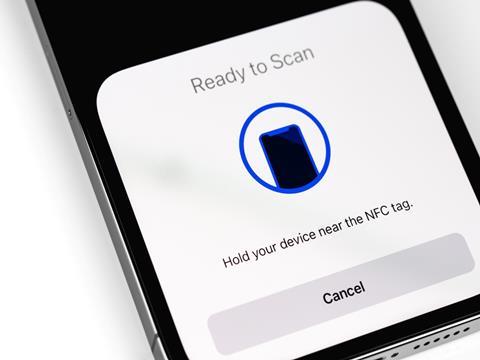
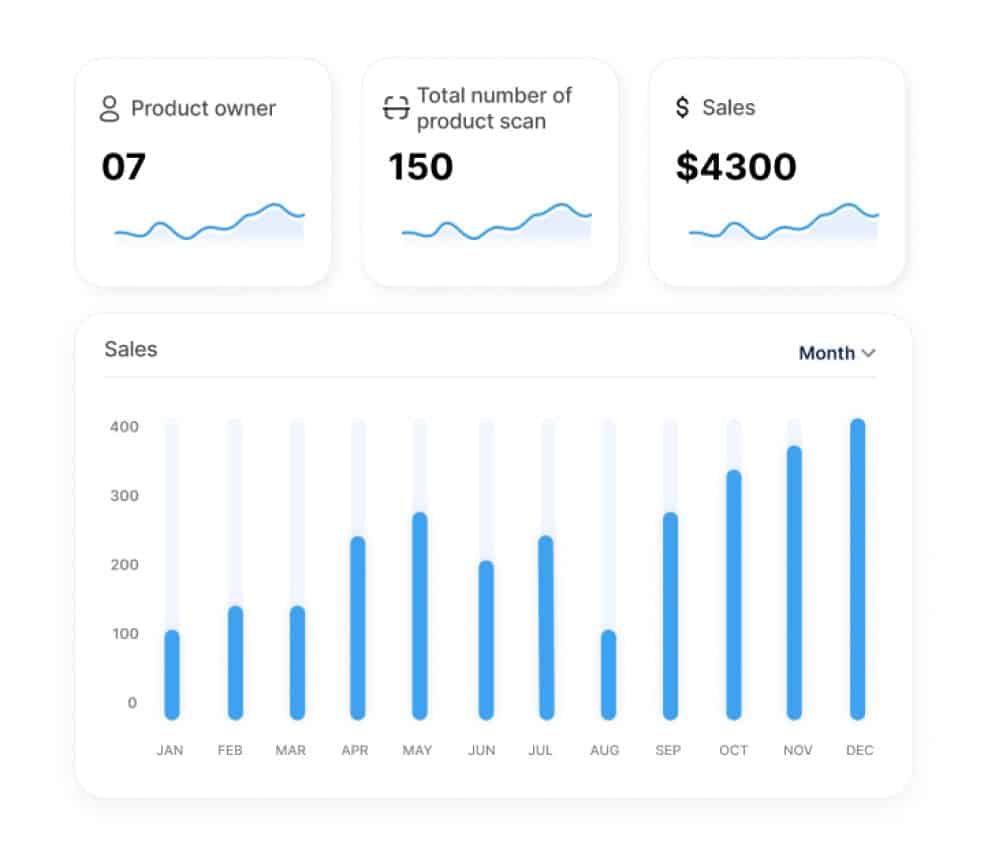
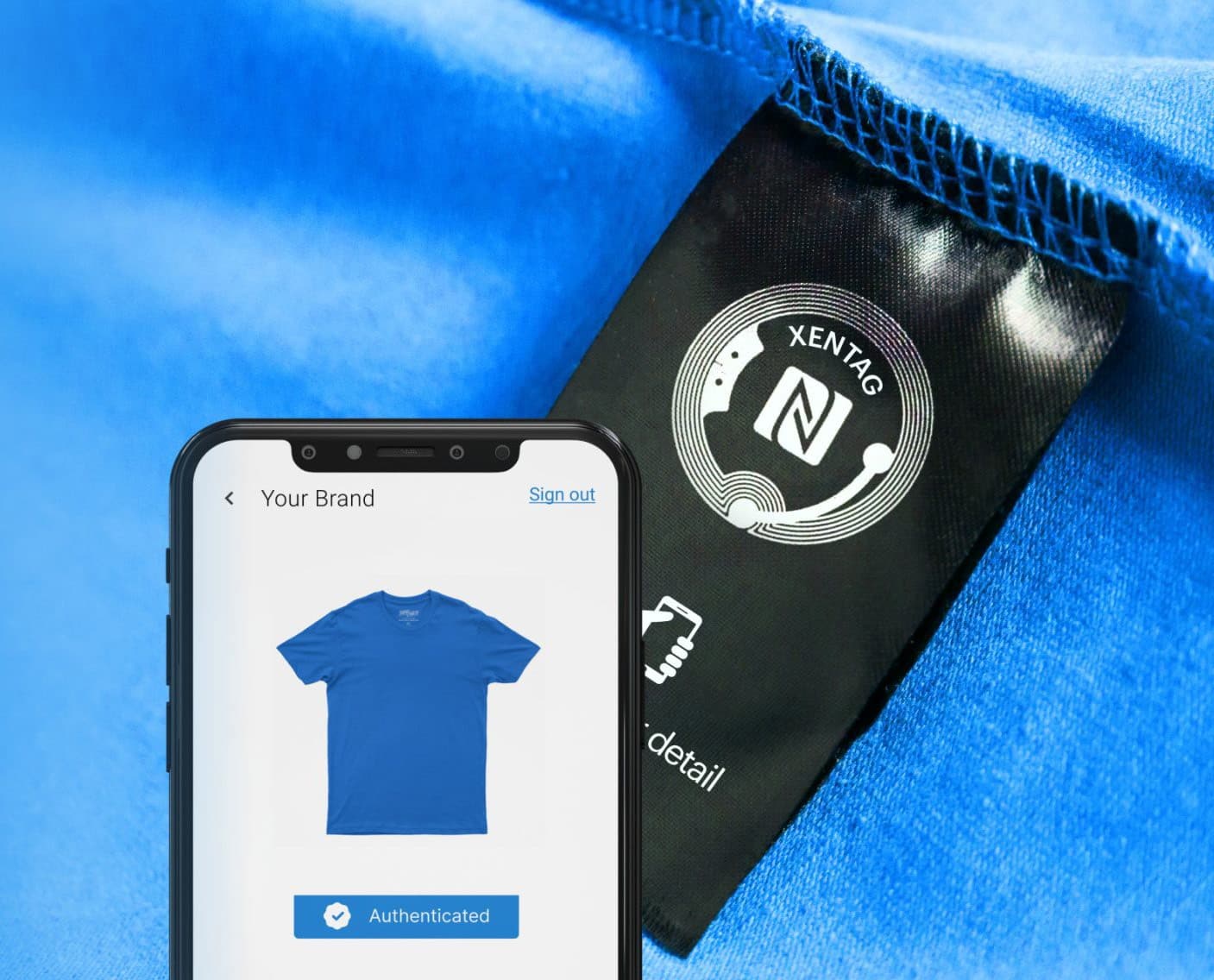


Hand holding smartphone tapping NFC-enabled smart packaging to trigger instant payment and product authentication

Smart Packaging Revolution: Products as Revenue Channels

The internet was built for information exchange. Payments were bolted on later.

For decades, commerce has required layers: logins, subscriptions, coupons, checkout pages, loyalty databases, and payment gateways. Friction has been normalized, and that is about to change with smart packaging.

With the emergence of x402, the long-dormant HTTP 402 “Payment Required” status code is being transformed into a machine-native payment protocol. Payment becomes part of the internet’s core request-response cycle. A resource can request payment, receive settlement, and grant access—all within a single, automated flow.

This shift does more than simplify checkout. It fundamentally changes how consumers interact with products. When smart packaging with secure NFC tags enables cryptographic product authentication, and x402 enables native payments, products stop being static goods.

They become economic actors.

From Smart Labels to Economic Endpoints

Smart labels powered by product authentication technology create a new foundation for commerce. XenTag embeds a secure, unclonable identity into each product using anti-counterfeiting solutions built on cryptographic hardware. When you first interact, the system automatically creates a custodial Algorand wallet for you. Every purchased product is registered in that wallet.

This creates a new primitive. Each physical product is now:

→ Cryptographically unique
→ Wallet-aware
→ Blockchain-linked
→ Event-trigger capable

When you combine smart packaging with x402-enabled payment flows, something powerful happens: every product becomes capable of initiating, receiving, and settling micropayments securely and transparently.

Six Ways Smart Packaging Transforms Commerce

1. Loyalty Becomes Programmable and Instant

Traditional loyalty systems operate as siloed databases. Points live in backend systems. Redemption requires manual checkout steps. Fraud and reconciliation are constant challenges.

With smart labels:

  • Loyalty tokens are issued as Algorand Standard Assets
  • Credited directly to the consumer’s custodial wallet
  • Verifiable, auditable, global, and programmable

With x402:

  • Redemption happens inside the HTTP interaction
  • The product or website returns a 402 Payment Required response
  • The wallet pays using loyalty tokens
  • Access or a discount is granted instantly

No coupon codes, no waiting for backend validation, no reconciliation cycles.

Loyalty transforms from a marketing abstraction into a micro-currency native to the product ecosystem.

2. Discounts Become Atomic and Trustless

Imagine a consumer tapping a smart packaging product and accessing a refill page. The server responds: “Redeem 100 loyalty tokens for a $10 discount?”

The consumer’s wallet executes the transaction. The discount applies instantly. The blockchain records the settlement.

Because the payment is on-chain:
→ It cannot be duplicated
→ It cannot be forged
→ It cannot be retroactively altered

Discounting becomes atomic and trustless—settled in seconds.

3. Supply Chain Security Through Real-Time Product Intelligence

Product traceability solutions built on smart labels generate authenticated product lifecycle data:

→ Activation date
→ Usage intervals
→ Batch identity
→ Geographic movement (if opted-in)

Manufacturers gain real-time visibility into:

→ True product activation rates
→ Consumption patterns
→ Regional demand signals
→ Inventory velocity

This moves forecasting from probabilistic to event-driven. Supply chain security improves because products themselves become live data nodes feeding directly into supply chain systems.

The result:

  • Lower overproduction
  • Reduced stockouts
  • Smarter distribution
  • More accurate demand planning

Traditional inventory management relies on estimates and historical trends. Smart packaging generates authenticated event data at every consumer interaction, capturing activation timing, consumption location, and replacement frequency. This shifts forecasting from probabilistic models to real-time visibility.

Manufacturers can identify unexpected demand patterns, adjust distribution proactively, and prevent stockouts before they happen. The product traceability solutions move from “what we shipped” to “what consumers actually activated and used.”

4. Automatic Reordering Through Agentic Commerce

x402 was designed for autonomous, agent-driven transactions.

When a product is nearing depletion:

  1. The consumer taps the smart label
  2. Or an AI assistant detects usage cadence
  3. The reorder endpoint responds with a 402 payment requirement
  4. The wallet settles the payment instantly
  5. Fulfillment is triggered automatically

No cart, no subscription management, no manual checkout. The smart packaging itself becomes the reorder interface. For consumables, this eliminates friction while preserving consumer control. For manufacturers, it reduces churn and increases lifetime value.

5. The Product as a Direct Revenue Channel

Historically, sales channels have been external to the product: retail stores, ecommerce platforms, marketplaces.

With smart labels + x402, the product becomes:
→ A loyalty issuer
→ A discount engine
→ A reorder trigger
→ A micropayment processor
→ A direct fulfillment initiator

In effect, every unit sold becomes a persistent, blockchain-linked sales terminal in the hands of the consumer.

This collapses the boundary between:

  • Marketing
  • Commerce
  • Fulfillment
  • Loyalty
  • Payments

They converge into a single programmable interaction layer enabled by anti-counterfeiting solutions that verify product authenticity at every transaction.

6. Secure Micropayments at Scale

Micropayments historically failed because card fees were too high, settlement was too slow, and infrastructure was too fragmented.

Algorand provides:
→ Low transaction costs
→ Deterministic finality
→ Native asset support

x402 provides:
→ Standardized payment negotiation at the HTTP level
→ Machine-readable payment requests
→ Seamless API integration

XenTag’s smart packaging provides:
→ Wallet auto-provisioning
→ Verified product authentication
→ Consumer ownership mapping

Together, they make it economically viable for products to handle payments measured in cents—or fractions of cents—in real time.

A New Era of Product Design: Smart Packaging as Infrastructure

We are entering a period where product design is no longer limited to materials, packaging aesthetics, and functional performance.

Instead, products will be designed with embedded economic logic.

A smart packaging product is not just an object. It is:
→ A programmable node
→ A wallet-linked asset
→ A loyalty engine
→ A data source
→ A fulfillment trigger
→ A micropayment endpoint

When combined with x402, the consumer interaction model changes from “scan and view” to “tap and transact.”

The product becomes a living interface between manufacturer and consumer—secure, transparent, and autonomous.

The Strategic Implication for Brand Protection Solutions

For brands, this means:

→ Direct-to-consumer economics without platform dependency
→ Real-time loyalty issuance and redemption
→ Closed-loop inventory intelligence through product traceability solutions
→ Frictionless automatic reordering
→ Cryptographically secure micropayments

For consumers, this means:

→ Immediate rewards
→ Seamless discounts
→ Effortless reordering
→ Transparent ownership
→ Secure, low-friction transactions

The companies that embrace this shift will not simply digitize products. They will redesign products as economic participants in a programmable commerce network.

Anti-counterfeiting packaging evolves from passive protection to active commerce infrastructure. Supply chain security becomes real-time and product-driven. Brand protection solutions transform from defensive measures into revenue enablers.

Explore XenTag’s Smart Packaging Solutions

XenTag provides product authentication, anti-counterfeiting solutions, and smart labels that transform products into programmable commerce endpoints. Our secure NFC tags enable cryptographic verification, wallet integration, and x402-native micropayments.

Learn more about how smart packaging can create new revenue channels for your products: xentag.com/solutions/platform


2025 pharma seizures timeline with FDA $3.5M Ozempic fakes, Health Canada alerts

Why 2025 Was the Turning Point for Pharma Authentication (Ozempic Cases)

Why 2025 marked the turning point for pharma authentication is clear from Ozempic cases:
→ 16,740 counterfeit weight-loss injections seized at a single U.S. port
→ Thousands more are infiltrating pharmacies through authorized channels
→ Health Canada seizing $378,000 in fake GLP-1 drugs in one operation

The story pharmaceutical supply chain executives can no longer ignore: counterfeit Ozempic and GLP-1 drugs reached crisis levels in 2025, and traditional serialization systems failed to stop them.

Two forces converged. First, the explosive demand for GLP-1 drugs created a lucrative target for counterfeiters operating at industrial scale. Second, the Drug Supply Chain Security Act (DSCSA) unit-level tracing deadline exposed critical gaps in QR-based serialization that counterfeiters exploit daily.

For quality assurance and supply chain leaders, 2025 marks the year pharma authentication shifted from regulatory compliance to business survival.

The 2025 Surge: When Counterfeits Reached the Authorized Supply Chain

Counterfeit pharmaceuticals typically infiltrate through unauthorized channels: rogue online pharmacies, social media marketplaces, and suspicious distributors. In 2025, counterfeit Ozempic broke that pattern. Fakes reached legitimate U.S. pharmacies through authorized supply chains.

FDA Seizures Inside the Authorized Supply Chain

The FDA seized hundreds of counterfeit Ozempic units on April 9, 2025, labeled with lot number PAR0362 and serial numbers starting with 51746517. Novo Nordisk confirmed PAR0362 was an authentic lot number, but the serial numbers were fabricated. The counterfeits were distributed outside authorized channels, yet appeared legitimate enough to reach pharmacy shelves. The FDA and Novo Nordisk are still testing seized products to determine their composition.

This followed an even larger December 2023 seizure of thousands of units with lot NAR0074 and serial number 430834149057. Testing revealed counterfeit components, including fake needles, raising infection risk concerns. By December 2025, the FDA seized additional batches with lot number PAR1229, identifiable only by the placement of “EXP/LOT” text on pen labels—a detail most pharmacists wouldn’t notice during routine receiving.

The Scale at the Border

U.S. Customs and Border Protection conducted a week-long operation at the Port of Cincinnati that revealed the industrial scale of the problem. Officers seized 16,740 counterfeit weight-loss injections, including Ozempic, semaglutide, retatrutide, and tirzepatide, with an estimated street value of $3.5 million. The shipments originated from Hong Kong, China, Colombia, and South Korea, destined for 40 states.

Internationally, Interpol’s Operation Pangea XVII resulted in the largest pharmaceutical seizures in the operation’s 17-year history. Health Canada alone inspected 19,193 packages during the five-month operation from December 2024 to May 2025, seizing 539 packages containing suspected counterfeit or unauthorized health products worth $378,170.

The pattern is clear: counterfeiters operate at scale, use sophisticated packaging that mimics authentic products, and exploit serialization systems designed for compliance, not authentication.

Regulatory Reckoning: When DSCSA Compliance Met Authentication Reality

November 27, 2025, marked the final DSCSA compliance deadline for dispensers. After years of delays and exemptions, pharmaceutical supply chains must now exchange serialized transaction data electronically at the unit level. Every package carries unique identifiers: National Drug Code (NDC), serial number, lot number, and expiration date. Every transaction creates an electronic record.

On paper, this creates an unbroken chain of custody from manufacturer to pharmacy. In practice, DSCSA solved traceability, not authentication.

The Gap Between Tracking and Verification

DSCSA mandates three interoperable capabilities: electronic exchange of transaction information, verification of product identifiers, and tracing at the package level. The system tracks where products move. It doesn’t verify whether products are genuine.

Arkansas demonstrated the gap in February 2025. An inspector used the National Association of Boards of Pharmacy’s Pulse verification technology to identify a counterfeit Ozempic unit. The discovery led to the immediate suspension of the distributor’s license. But the counterfeit had valid serialization data—it passed initial supply chain checks because serialization alone can’t distinguish authentic products from sophisticated fakes.

Florida-based wholesaler Sterling Distributors received an FDA warning for DSCSA violations, including the sale of counterfeit Ozempic pens to pharmacies in Arkansas and Mississippi in late 2024. The distributor operated within the serialization system but failed to identify illegitimate products.

The Counterfeit Exploit

DSCSA assumes serial numbers represent authentic products. Counterfeiters discovered they could copy serial numbers from genuine products, print them on counterfeit packaging, and generate transaction data that appeared legitimate. The system traces the counterfeit through the supply chain while flagging nothing suspicious.

QR codes compound the vulnerability. Open-format barcodes can be photographed, copied, and reprinted. There’s no cryptographic verification. A pharmacy scanning a counterfeit product with a copied serial number sees the same data as scanning an authentic product.

Industry surveys estimate serialization error rates of 2-3% under normal conditions, higher during high-volume periods. That margin means thousands of units flagged for investigation annually. Overwhelmed quality teams often clear suspect products after visual inspection, which can not detect sophisticated counterfeits.

Technology Shortcomings: Why Visual Inspection Can’t Scale

Pharmaceutical counterfeiting evolved from crude imitations to industrial-precision replication. Modern counterfeits match authentic packaging in color, font, hologram placement, and barcode formatting. Detection requires expert examination under controlled conditions—impossible at receiving docks processing thousands of units daily.

QR codes and printed serial numbers operate on the same vulnerability: they’re visual features anyone can photograph and reproduce. The authentication process relies on matching what’s printed (visible data) against what’s recorded (database entry). If counterfeiters obtain genuine serial numbers through infiltration, data breaches, or simply photographing pharmacy inventory, they can create counterfeits that authenticate successfully.

The Investigation Capacity Problem

A 2-3% error rate across millions of pharmaceutical units generates massive false-positive volumes. Investigation capacity can’t keep pace. Quality teams develop “clearance protocols” to process flagged units faster, often defaulting to visual inspection and releasing products that look authentic.

Counterfeiters exploit this predictable response. They invest in packaging quality, knowing visual inspection represents the final authentication checkpoint. High-quality fakes pass through because overwhelmed inspectors can’t detect differences invisible to the naked eye.

The technology gap isn’t about better printing or more sophisticated holograms. It’s fundamental: visual features can be replicated. Authentication systems that rely on visual verification will always fail against well-funded counterfeiting operations.

Next-Generation Authentication: Cryptographic Certainty Over Visual Inspection

Pharmaceutical authentication requires a different technological foundation—one based on mathematical impossibility rather than visual complexity. Cryptographic NFC authentication uses encrypted keys stored in a certified secure silicon (the same standard as payment cards). The chip proves it knows a secret key without revealing it through challenge-response protocols. Counterfeiters cannot extract keys from certified chips, clone the cryptographic response, or create tags that authenticate successfully. Verification requires only an NFC-enabled smartphone—a pharmacist taps the phone to the product and receives a binary result. Unlike QR codes, which can be photographed and reproduced, the security resides in chip hardware, not printed features.

Advanced implementations combine three layers: tamper-evident antennas that break when packages open, flagging subsequent scans; cryptographic authentication that counterfeiters cannot replicate; and blockchain certificates issued at manufacture that cannot be forged retroactively. This addresses both counterfeiting and the $127 billion annual return fraud problem. The combination operates on mathematical certainty rather than visual inspection or investigator judgment, making counterfeiting unfeasible, not merely difficult.

The Path Forward

The 2025 Ozempic cases proved that DSCSA compliance alone won’t stop sophisticated counterfeiting. Visual inspection can’t scale. QR-based serialization can be copied. Pharmaceutical companies face escalating risks: product liability, regulatory enforcement, patient harm litigation, brand damage, and lost customer trust. The FDA’s post-2025 enforcement means companies that distribute counterfeits face significant legal consequences.

For specialty pharmaceuticals and high-value products where counterfeiting economics are most favorable, cryptographic authentication represents risk management, not just regulatory compliance.

Explore Authentication Solutions

XenTag provides cryptographic NFC authentication for pharmaceutical products. The platform uses EAL4+ certified secure chips, tamper-evident antenna designs, and blockchain certificate verification to create item-level authentication that counterfeiters can’t replicate.

For pharmaceutical manufacturers evaluating authentication options beyond DSCSA serialization, XenTag offers pilot programs to test cryptographic authentication on high-value product lines.

Learn more about pharmaceutical authentication technology and pilot frameworks: www.xentag.com

The 2025 Ozempic cases proved serialization isn’t enough. Cryptographic authentication provides the security layer that DSCSA was never designed to deliver.